
Malaysia’s Economic Growth Trends: The Last Decade Explained
From 2016 to 2026, Malaysia’s economy faced different challenges and opportunities. This article covers the major trends, slowdowns, and recoveries you should understand.
Understanding a Decade of Change
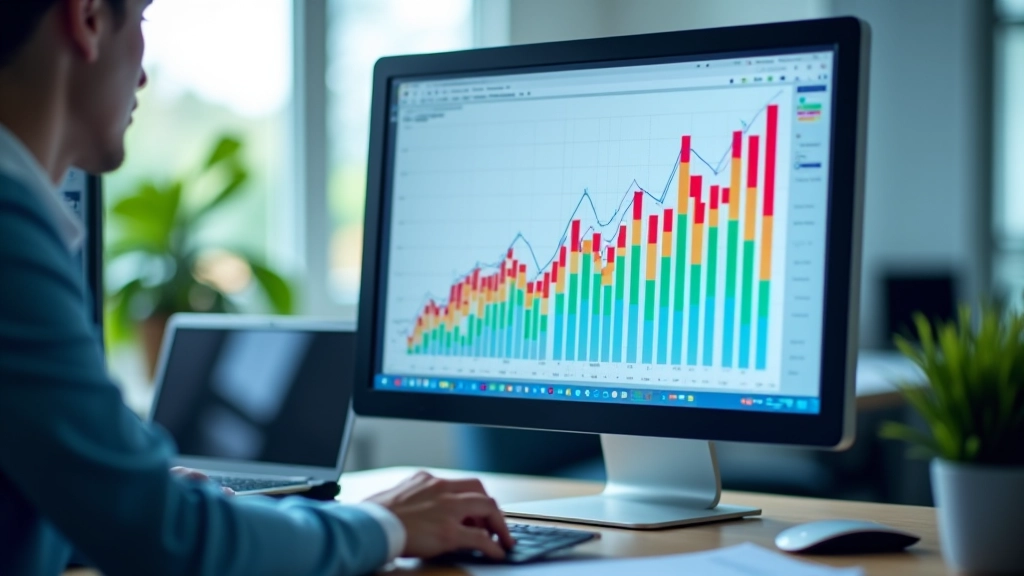
Malaysia’s economy didn’t follow a straight path over the last ten years. We’ve seen solid growth periods, sudden contractions, and surprising recoveries. Between 2016 and 2026, the country experienced events that fundamentally shaped how we understand economic performance — from the pre-pandemic boom years to the COVID-19 shock, then the gradual rebuilding that followed.
What’s important to grasp is that GDP growth rates tell only part of the story. Behind those percentage changes sits actual economic activity: manufacturing output, services expansion, employment levels, and structural shifts in how different sectors contribute. Understanding these trends helps you interpret economic news and data releases from the Department of Statistics Malaysia (DOSM) with real insight.
The Pre-Pandemic Years: 2016-2019
Malaysia’s economy grew steadily during this period, averaging around 4.5-5% annual GDP growth. It wasn’t explosive, but it was consistent. The manufacturing sector remained robust, particularly electronics and electrical products, which still dominate export figures. Services expanded too — financial services, tourism, and retail all showed healthy expansion.
These weren’t dramatic years, but they were productive ones. Unemployment stayed low, averaging around 3.3%. The ringgit fluctuated with global commodity prices, which matters because Malaysia exports significant amounts of petroleum, palm oil, and semiconductors. When oil prices moved, the economy moved with them.
What’s worth noting: this period established baseline expectations. When growth rates dipped below 4% in later years, it felt like contraction even when the economy was still expanding. That psychological anchor matters when you’re reading economic commentary.


The 2020 Shock: Pandemic Impact
Then came 2020. Malaysia’s economy contracted by 5.6% that year — the sharpest decline in decades. This wasn’t theoretical economics anymore. Factories shut down, tourism evaporated, retail stores closed. The services sector, which’d been growing steadily, suddenly lost 30-40% of its activity in some segments.
Manufacturing held up better than expected because semiconductor production continued. That sector’s criticality to global supply chains meant Malaysian factories kept running when others shut down. But still, 2020 was rough. Unemployment spiked to 3.9%, and household incomes took real hits in hospitality, tourism, and retail.
The interesting part? Recovery started faster than many predicted. By Q3 2020, growth turned positive again. This wasn’t because the pandemic ended — it didn’t — but because people and businesses adapted. Retail moved online. Services went digital. Manufacturing adjusted supply chains. The economy’s flexibility surprised most economists.
Recovery and Structural Shifts: 2021-2023
Malaysia bounced back strongly in 2021 with 3.1% growth, then accelerated to 8.7% in 2022. These aren’t just recovery numbers — they represent real expansion. Manufacturing output hit record levels. Electronics exports surged, driven by semiconductor demand from global tech companies. Tourism began returning, though not to pre-pandemic levels.
During this period, something important shifted. Services’ share of GDP grew relative to manufacturing. It’s not that manufacturing declined — it kept expanding — but services grew faster. Financial services, digital commerce, and tech-enabled industries created new economic activity. This structural change matters because it changes employment patterns and wage dynamics.
Inflation emerged as a concern starting in late 2021. Rising commodity prices and supply chain disruptions pushed prices up. The central bank responded with interest rate increases in 2022-2023. These moves cooled growth slightly but helped stabilize the currency and inflation expectations. By 2023, growth moderated to around 3.6%, which felt slower but was actually sustainable.


Recent Trends and 2024-2026 Outlook
From 2024 onwards, Malaysia’s economy’s been navigating a more complex environment. Global growth slowed, which affects export-dependent economies like Malaysia’s. Trade tensions and supply chain reorganization created uncertainty. Yet domestic consumption remained relatively strong, and manufacturing continued adapting to global demand shifts.
Growth rates settled into the 3-4% range — respectable but not exceptional. What matters more is composition. Domestic consumption now drives more growth than exports, which represents a healthy diversification. Foreign direct investment in high-tech manufacturing and digital services has remained solid, showing confidence in Malaysia’s future positioning.
The sectoral breakdown shows services now represent over 55% of GDP. Manufacturing accounts for roughly 22-23%, agriculture about 7%, and construction around 4%. These percentages shift slightly year to year, but the trend is clear: Malaysia’s becoming more service-oriented while maintaining manufacturing strength. This shift affects everything from employment needs to infrastructure priorities to skill requirements in the workforce.
Key Takeaways from a Decade of Growth
Volatility is Normal
The 5.6% contraction in 2020 followed by 8.7% growth in 2022 shows how economies respond to shocks. Understanding that variation is expected helps you avoid overreacting to single-year data.
Sectors Change, Gradually
Manufacturing didn’t disappear — it evolved. Electronics remained critical, but digital services grew faster. Structural shifts happen over years, not quarters, which is why DOSM data needs to be read with long-term perspective.
Global Forces Matter
Oil prices, semiconductor demand, trade tensions — external factors drive a significant portion of Malaysia’s growth. An export-dependent economy can’t isolate itself from global conditions.
Adaptation is Key
Whether it’s pandemic lockdowns or supply chain disruptions, Malaysia’s economy shows resilience through adaptation. Businesses shifted to digital, factories reorganized production, services innovated. That flexibility matters as much as any single growth statistic.
What This Means for Understanding Malaysia’s Economy
A decade of economic data tells a story of an economy that’s resilient, evolving, and responsive to both opportunities and challenges. The 4-5% average growth rate from pre-pandemic years set high expectations, but 3-4% growth during more recent periods isn’t failure — it’s realistic expansion in a more complex global environment.
When you’re reading DOSM quarterly reports or economic commentary, you’re now equipped with context. You understand that growth rates fluctuate, that sectoral composition matters, that external factors influence domestic performance. You can see how 2020’s contraction wasn’t a collapse but a temporary disruption followed by adaptation.
The next phase of Malaysia’s economic development will likely involve further services expansion, continued tech manufacturing growth, and increasing emphasis on digital economy development. Understanding where we’ve been makes it easier to anticipate where the economy’s headed. That’s the real value of looking back at a decade of trends — it’s not just history, it’s context for understanding the present and preparing for what comes next.
Related Articles



Educational Disclaimer
This article provides educational information about Malaysia’s economic trends and GDP data for the period 2016-2026. The information is based on historical data from the Department of Statistics Malaysia (DOSM) and general economic principles. This content is intended to help you understand macroeconomic concepts and historical trends — it’s not investment advice, financial guidance, or economic forecasting. Economic situations vary by individual circumstance, and data interpretation can differ based on methodology and perspective. For specific financial decisions or professional economic analysis, consult qualified economists or financial advisors. Growth rates, sectoral contributions, and economic indicators mentioned are educational examples to illustrate economic principles, not predictions of future performance.